

Streaming audio ads work for local businesses when the goal is affordable, repeated reach inside a defined geography, and they do not work when the goal is a measurable click. You buy them the way you buy radio, targeted the way you buy digital, and you should judge them on brand lift and assisted conversions rather than on direct response.
That distinction decides whether the channel is a good use of your budget or a line item you cannot defend in six months.
The category is real money now. IAB and PwC put US digital audio ad spend at $8.4 billion in 2025, up 10.2% year over year, with podcast advertising alone at $2.862 billion and growing 17.6%. IAB forecasts podcast ad spend will pass $3 billion in 2026. What is worth noticing is the other side of that number: digital audio is still only about 2.8% of total digital ad spend, which is why the inventory remains reasonably priced compared with search and social.
Do streaming audio ads work for local businesses?
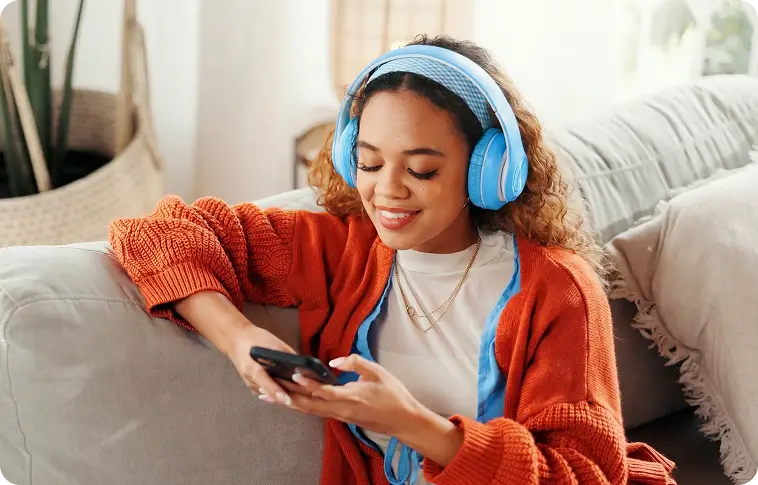
Yes, for a specific job. Audio reaches people while they are driving, working, or exercising, which are moments no other channel occupies, and it reaches them without competing for screen attention.
What it does well is frequency at a low cost inside a tight geography. What it does poorly is prove itself. Nobody clicks an ad while merging onto I-4, so the measurement you get is weaker than search or social, and any vendor promising direct-response performance from audio is selling you something.
The businesses this fits are the ones with a simple, memorable proposition and a local service area: home services, dealerships, medical practices, restaurants, anyone whose name needs to be familiar before the need arises. The businesses it fits poorly are the ones with a complex offer or a long consideration process that requires explanation.
What is streaming audio advertising, exactly?
Ads inserted into digital audio: music streaming services, podcasts, and streaming radio. There are three buying routes and they behave differently.
| Type | How it is bought | Best for | Main limitation |
|---|---|---|---|
| Music streaming (Spotify, Pandora, iHeart) | Self-serve or programmatic, by geography and demographic | Broad local reach with tight geo control | Listeners are not engaged with the content the way podcast audiences are |
| Podcast dynamic insertion | Programmatic, by category and audience | Scale across many shows without negotiating individually | You are an interruption, not an endorsement |
| Podcast host-read | Direct with the show or a network | Credibility transfer from a trusted host | Priced per show, harder to buy locally, minimums can be high |
For most local advertisers, music streaming and programmatic podcast insertion are the practical options. Host-read spots are excellent when the show genuinely overlaps your market, which for a single-metro business is uncommon and worth checking rather than assuming.
How much do streaming audio ads cost?
Audio is sold on a cost per thousand impressions basis. Published 2026 ranges give you a useful starting point: programmatic dynamic ad insertion runs roughly $15 to $25 CPM, host-read spots on mid-tier podcasts $25 to $50, and host-read placements on top-100 shows $60 to $120. Music streaming inventory generally sits at the lower end.
Treat those as orientation, not a quote. Rates move by market, season, and how tightly you target, so ask for current pricing on your specific geography and flight dates before you budget.
What is stable is what drives the price. Tighter geographic targeting costs more per thousand than a broad buy. Podcast inventory generally costs more than music streaming. Adding demographic or interest layers raises the rate. And the fourth quarter costs more than the rest of the year, which matters this year in particular because political spending compresses inventory across every channel through early November, something we covered in our look at advertising during election season.
Budget for two other things people forget. Production, since a bad audio spot is more obviously bad than a bad banner, and enough frequency to matter. An audio buy spread so thin that each listener hears it once is money spent on nothing. If your budget only supports minimal frequency across a whole metro, shrink the geography rather than the frequency.

How precisely can you target?
More precisely than broadcast radio, less precisely than search. You can target by geography down to the zip code level, by age and gender, by listening context such as workout or commute playlists, and by device.
What you generally cannot do is target by intent. There is no audio equivalent of someone typing “emergency plumber near me.” That is the trade: you reach a well-defined group of people, but not at the moment they need you.
This is why we usually position audio alongside a capture channel rather than instead of one. Audio builds the familiarity, and search catches the demand when it appears. Judging audio on its own last-click numbers while search takes credit for the conversion is the most common way this channel gets cancelled unfairly.
How do you measure something nobody clicks?
With three measurements, none of which is click-through rate.
- Branded search volume. If audio is working, more people search your business by name. This is the cleanest signal available and it is free to track.
- Geographic holdout. Run audio in some zip codes and not others, then compare lead volume between them. It requires discipline but it produces a real answer.
- Direct-response proxies. A vanity URL or a dedicated phone number captures a fraction of the effect. Treat it as a floor, not a measurement, because most people who hear an ad will find you by name later.
Set the measurement plan before the campaign runs. Deciding afterward how to evaluate it is how these buys turn into arguments. The wider question of what belongs in a performance report is covered in what a marketing report should include.
What makes an audio ad actually work?
Repetition of the name and one idea. You have fifteen or thirty seconds with someone who is doing something else, and the ad has to survive being half-heard.
- Say the business name at least twice, including within the first five seconds.
- Make one point. A spot that lists five services communicates none of them.
- Give a memorable action, ideally the business name itself as the search term rather than a URL nobody can type while driving.
- Sound local. Naming the actual market signals relevance faster than any targeting parameter.
- Produce it properly. Audio is an intimate format and poor production reads as an unserious business.
For Central Florida advertisers there is a real seasonal wrinkle. Commute patterns and population both shift when seasonal residents and tourists arrive, so a spot built around a weekday drive-time audience in September is talking to a different metro by January. Refresh geography and daypart assumptions between quarters instead of setting them once.
When should you skip streaming audio?
Skip it when your budget cannot support meaningful frequency, when your offer needs explanation or visual proof, or when you have not yet fixed the channels that capture existing demand.
That last one matters most. If your search campaigns are losing impression share to budget, or your website is not converting the traffic it already gets, audio is the wrong next dollar. Awareness spending on top of a leaky funnel produces demand that goes to a competitor who is easier to contact.
Fix capture first, then buy attention. If you are weighing audio against video, our comparison of OTT advertising vs cable TV and our guide to programmatic advertising cover where each one fits in a local media mix.
Frequently asked questions
Is streaming audio cheaper than radio?
Usually on a cost per thousand basis, and the bigger advantage is that you are not paying for a whole broadcast signal when you only serve one part of a metro. Programmatic audio inventory ran about $15 to $25 CPM in 2026, with host-read podcast placements considerably higher. Get current quotes for your market before budgeting.
Can a small local business afford it?
Yes, if the geography is small enough to support real frequency. The mistake is spreading a modest budget across an entire metro, which buys one impression per person and accomplishes nothing.
Spotify or podcasts?
Music streaming for broad local reach with tight geographic control. Podcasts when there is a genuine audience or topic overlap worth paying more for. Many local advertisers start with music streaming because the geo targeting is simpler.
How long before audio shows results?
Plan on at least a full quarter. Frequency has to accumulate before familiarity does, and a four-week test usually measures nothing except that four weeks is too short.
Do I need a professionally produced spot?
Yes. Audio has no visuals to carry a weak execution, and listeners notice production quality even when they cannot name what is wrong. Budget for it as part of the campaign, not as an afterthought.
How do I know if it worked?
Watch branded search volume and run a geographic holdout if your budget allows. Do not judge audio by last-click conversions, because the channel does not produce them even when it is working.
Where does audio sit in a real media plan?
Underneath the capture channels, not instead of them. Streaming audio is one of the digital channels we buy alongside programmatic display, OTT and CTV, geofencing, and Google Ads, and the order we build in almost never starts with audio.
The sequence we use with clients is capture first, then attention. Search and local listings catch the people already looking for you. Once those are working and no longer losing volume to budget, audio and video start earning their place by creating the demand that search then captures. Buying awareness before capture works is how a media plan produces impressions and no phone calls.
Considering audio for your next campaign? Upwynn Marketing will tell you whether audio fits your budget and market, or whether the money is better spent elsewhere, in a free consultation. We use real experience and 90+ data sources for the best targeting, with no long-term contracts and hands-on support. Start with our media buying services.