



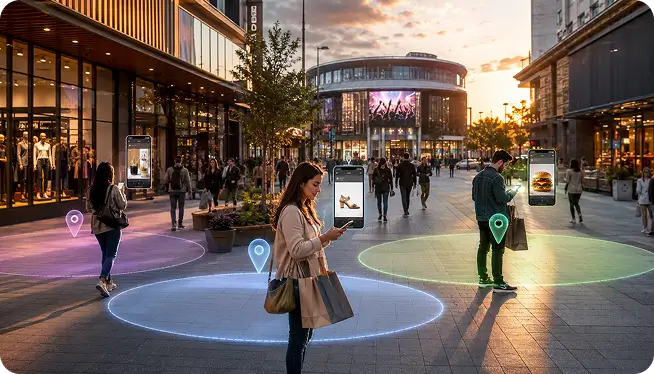


Think of geofencing as drawing invisible boundaries around specific locations—your store, your competitor’s location, industry events, or anywhere your ideal customers spend time. When people enter these virtual zones, they see your ads on their phones.
​
The result? You’re not just reaching people who might be interested. You’re reaching people who are already in the buying mindset, at the exact moment location matters most.

Catch potential customers when they're near your business or visiting competitors. Your message reaches them when they're already thinking about making a purchase.

Someone visited your competitor but didn't buy? Now you can show them why your business is the better choice—while the experience is still fresh in their mind.

Why advertise to everyone when you can advertise to people who are actually within driving distance? Geofencing eliminates geographic waste from your ad spend.

See exactly how many people who saw your ads actually visited your location. Finally, advertising you can measure from impression to front door.

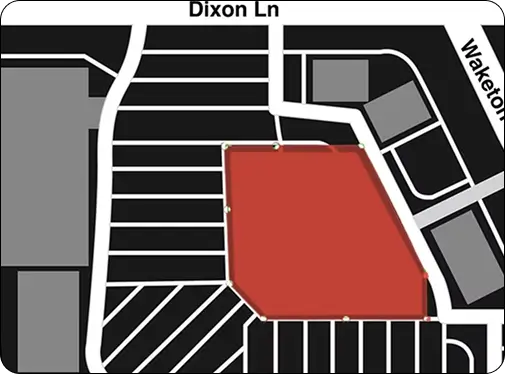
Radius targeting helps you reach exact real-world locations, from malls to storefronts, reducing wasted ad spend.
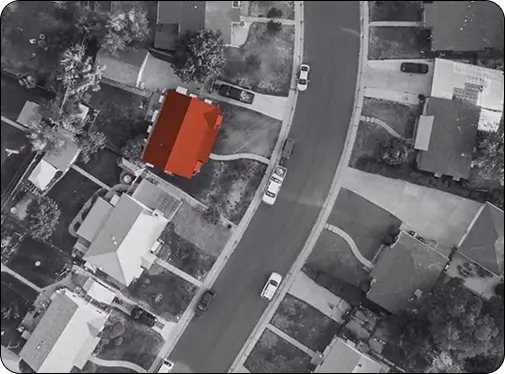
We track visits to your business and measure real conversions, not just ad clicks.
Our data partners help identify your best customers and target them with sharper, location-based ads.


We identify high-value locations based on your customer data and business goals—not guesswork.

Custom geofences that capture intent without wasting impressions on irrelevant foot traffic.

Location-aware ad creative that speaks to where people are and what they're likely thinking.

Real-time adjustments based on foot traffic patterns, conversion data, and competitive intelligence.
Geofencing creates virtual boundaries around specific locations using GPS coordinates. When someone enters these boundaries with their smartphone, they’re added to a targetable advertising audience. Later, when they use apps or browse websites, they see your ads across the digital ecosystem.
Think of it as putting a digital fence around your competitor’s store. Anyone who walks inside becomes someone you can advertise to, even after they leave.
Regular online advertising targets people based on demographics, interests, or online behavior. Geofencing targets people based on real-world locations they visit. This means you’re reaching people who have demonstrated actual buying intent through their physical actions, not just their online activity.
For example: Instead of targeting “people interested in fitness,” you target “people who actually visit gyms.” The intent level is dramatically higher.
Most clients see initial data within 7-14 days and meaningful results within 30-45 days. However, the timeline depends on your target locations, budget, and how many people visit those locations daily.
Businesses targeting high-traffic competitor locations often see faster results than those targeting niche events or smaller venues.
It is all up to your goals and your current marketing efforts. Our geofencing campaigns typically start at $750 per month, depending on your current marketing efforts, market size, number of target locations, and business goals. This includes strategy, setup, management, and optimization.
Most small businesses see 300-500% ROI within 90 days. Remember: this isn’t just advertising spend—it’s customer acquisition that pays for itself.
We track actual visits to your location using conversion zone technology, then multiply by your average customer value and conversion rate. For example:
Monthly ad spend: $1,200
New customers: 18
Average customer value: $350
Revenue generated: $6,300
ROI: 425%
In the event you do not have a location or you are mobile we have other strategic ways to target the ROI.
Geofencing works for businesses with customer values as low as $25-50, as long as you have sufficient volume and repeat purchase behavior. We optimize for visit cost and conversion rates to ensure profitability regardless of transaction size.
We’ve had successful campaigns for coffee shops ($8 average), fast-casual restaurants ($15 average), and convenience stores ($12 average).
All location data is anonymized and aggregated—we never see individual people’s information or track specific individuals. It’s similar to how Google Maps shows you nearby businesses or how your phone suggests restaurants when you’re in a new area.
Studies show 70% of consumers prefer location-relevant advertising over random ads. People would rather see ads for businesses they can actually visit than irrelevant national brands.
Our polygon mapping technology is accurate to within 3-5 meters, allowing us to target specific building sections while excluding parking lots, employee areas, or irrelevant spaces.
We also use dwell time requirements (typically 5-15 minutes) to ensure people actually visited the location rather than just driving past.
Yes, this is completely legal and ethical. You’re not accessing private property or interfering with their business—you’re simply advertising to people who chose to visit public locations. It’s similar to handing out flyers on a public sidewalk outside a competitor’s store.
Many of our clients discover their competitors are already geofencing their locations.
For you? Not complicated at all. We handle the entire technical setup, including:
Identifying optimal target locations
Creating precision geofences with polygon mapping
Setting up conversion tracking around your business
Developing location-specific ad creative
Managing campaigns and optimization
You approve the strategy and review performance reports. We handle everything else.
We use conversion zone technology that creates virtual boundaries around your business location. When someone who saw your geofencing ad visits your location within the attribution window, it’s counted as a conversion.
You’ll receive detailed reports showing:
How many people saw your ads
How many visited your location
When they visited (same day, next day, etc.)
Average time between ad exposure and visit
If you are mobile or don’t have a brick and mortar location we will determine the best reporting to track results.
Modern geofencing platforms reach 85-95% of smartphone users through multiple data sources (GPS, WiFi, cell towers, app-based location sharing). Even users who’ve restricted some location sharing are typically still reachable through apps they’ve given location permission.
The audience size is sufficient for effective campaigns in virtually all markets.
We work with data partners who maintain compliance with all privacy regulations while still providing effective targeting. The iOS changes primarily affected app-based tracking, but geofencing uses multiple data sources and aggregated location intelligence.
Campaign performance has remained strong post-iOS updates.
No long-term contracts required. We operate on a month-to-month basis because we believe in earning your business with results, not locking you in with contracts. Though we recommend some minimums to really see results.
Most clients continue working with us because geofencing becomes their most profitable marketing channel, but you’re free to cancel anytime.