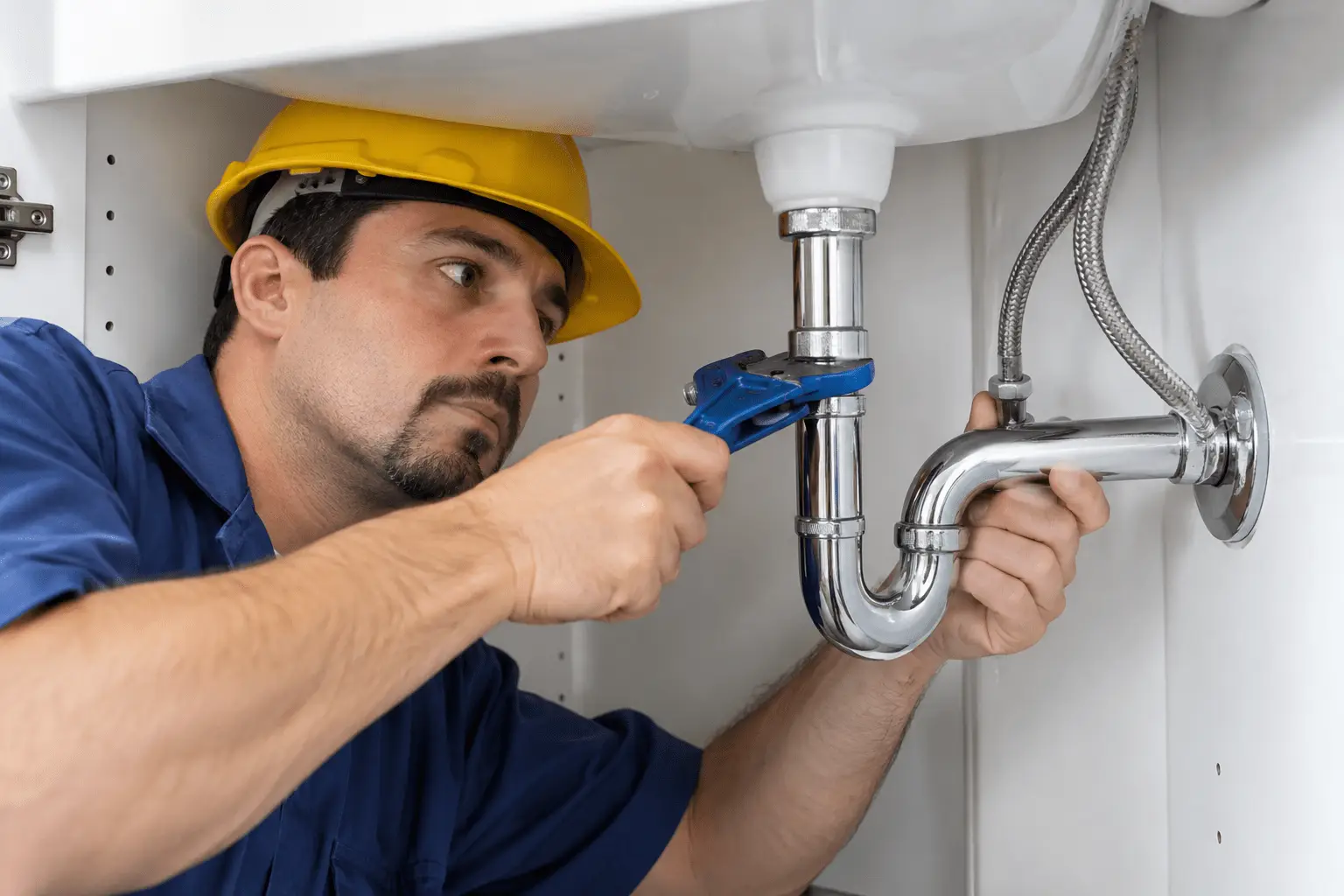


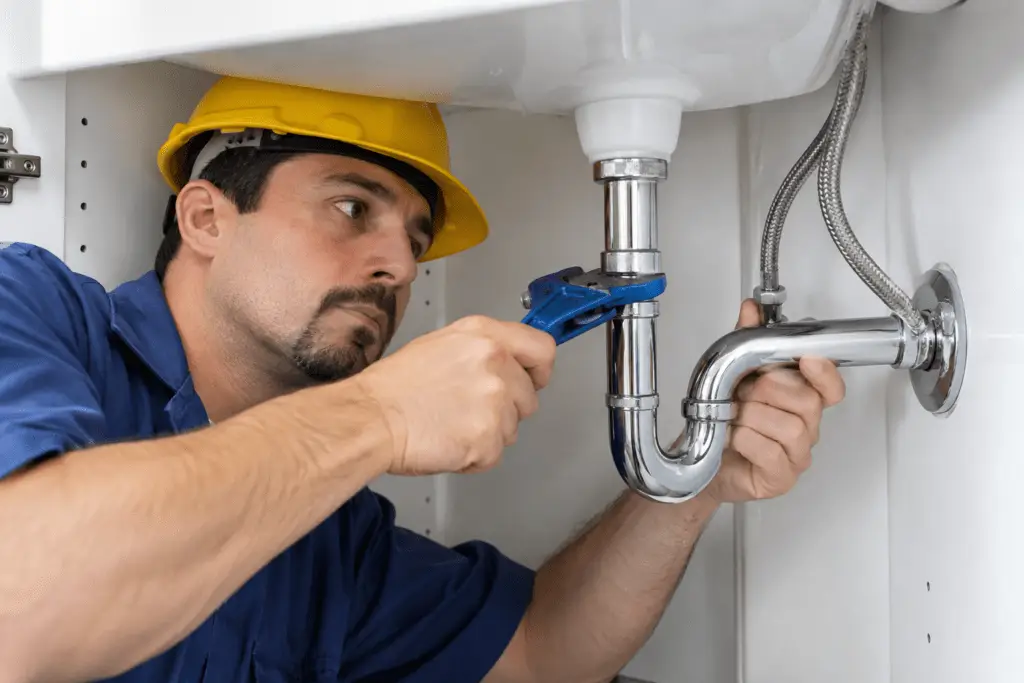
Emergency home services marketing is won on speed, not creative. Three things decide it: ads that run at 2am, a phone answered in under thirty seconds, and a message that names the problem the caller already has. Build those before the first freeze, because emergency demand does not wait for your campaign to be ready.
You are not creating demand here. You are standing in front of it when it appears.
How do you market emergency home services?
By being findable and reachable at the exact moment something breaks. Emergency customers do not browse, compare five companies, or read your about page. They search once, call the first credible result, and book whoever answers.
That changes what matters. Brand preference, nurture sequences, and clever creative do very little in this category. Placement, availability, and answer speed do almost all of the work. A mediocre ad that appears at 11pm and gets answered on the second ring beats an excellent ad that appears at 11pm and goes to voicemail.
The practical version: your emergency campaign is mostly an operations problem wearing a marketing budget.
A Central Florida HVAC company came to us this fall ready to switch on emergency advertising. We started somewhere less exciting than they expected. Before writing a single ad, we sat down and defined what “24/7” actually meant for them: which hours were genuinely covered, which areas they would drive to at night, and what happened to a call that came in at eleven. Several of those answers turned out to be assumptions rather than policy, and they did not agree with each other.
That is not a detour. Advertising a promise the business has not defined internally is the fastest route to one-star reviews written by people who believed you.
What makes emergency marketing different from tune-up marketing?
Tune-up marketing creates demand. Emergency marketing captures it. That single difference changes the channel mix, the offer, the bidding, and how you measure the whole thing.
A fall tune-up campaign persuades someone to do something they were not planning to do, so it needs an offer, a season, and lead time. We covered that motion in detail in our guide to HVAC fall marketing campaigns, and the two campaigns should run differently even when they run at the same time.
| Tune-up campaign | Emergency campaign | |
| Demand | You create it | You intercept it |
| Offer | Discount or bundled inspection | Availability. Price is secondary |
| Timing | Scheduled weeks ahead | Same hour |
| Hours | Business hours are fine | Nights, weekends, holidays |
| Winning metric | Cost per booked appointment | Answer rate and speed to lead |
| Ticket size | Low, with upsell potential | High, often same-day |
Companies that run one campaign for both usually underperform at both. The tune-up money gets spent overnight against emergency searches, or the emergency budget gets throttled during the hours it matters most.
When does winter emergency demand spike in Central Florida?
In short, sharp bursts rather than a long season. Florida does not get a steady winter of no-heat calls the way northern markets do. It gets a handful of freeze events between December and February, and each one produces more volume in 48 hours than the previous three weeks combined.
That pattern should shape how you buy. A campaign budgeted evenly across the winter spends most of its money on quiet days and then runs out of budget on the two mornings that actually mattered.
Two local realities worth building around. Most Central Florida homes heat with heat pumps or electric strip heat, which struggle in a sudden cold snap and generate a wave of no-heat calls from equipment that was working fine in November. And older Orlando neighborhoods still have aging pipe systems, so freeze events, slab leaks, and water heater failures cluster in the same housing stock.
Watch the forecast, not the calendar. A cold front three days out is the signal to raise budgets and add staff, and it is a signal your competitors frequently ignore until the morning of.
Which channels capture emergency calls?
The ones that put a phone number in front of someone at the top of the results page. Anything that requires a second step loses to something that does not.
| Channel | Why it works for emergencies | Watch out for |
| Local Services Ads | Sits above search ads, shows a call button, and is billed per lead rather than per click | Requires license and insurance verification. Start the approval weeks before you need it |
| Search ads, call-only | Captures “burst pipe near me” intent directly, with no landing page in between | Needs its own overnight budget or it goes dark exactly when you want it |
| Google Business Profile | Free, and often the first thing a panicked customer taps | Hours must say you are open. A profile showing “closed” at 9pm removes you from the choice set |
| Retargeting | Cheap reminder to people who called once and did not book | Useless as a primary emergency channel. Nobody waits to be retargeted |
| Existing customer list | Highest close rate available. One SMS before a freeze fills the schedule | Requires consent and a clean list you maintained before the emergency |
Profile accuracy is doing more work here than most owners expect, which is why emergency readiness and SEO and AEO are the same job in this category rather than two separate projects.
If you run only one thing, run Local Services Ads with verified hours and a phone that gets answered. The approval process is the reason to start in October rather than January.
What do the numbers say about emergency response?
That the bar is lower than most owners assume, which is good news if you are willing to clear it. The industry’s own response data suggests the competitive advantage in emergency work is available to anyone who simply picks up the phone.
- Roughly 67% of plumbing companies do not answer calls after 6pm, per an Angi home services survey widely cited across the trade. If two thirds of your competitors are unreachable in the evening, evening is the cheapest competitive advantage available to you.
- Responding within five minutes makes a lead dramatically more likely to qualify than responding within thirty. The widely referenced Lead Response Management research puts the difference at around 21 times. Even discounting the exact multiple, the direction is not in dispute and it is steeper in emergency categories than in considered purchases.
- 68% of consumers say they will only use a business rated four stars or higher, up from 55% a year earlier, according to BrightLocal’s 2026 Local Consumer Review Survey. In a category where someone is letting a stranger into the house at night, that threshold is doing a lot of work.
Treat the first two as directional rather than precise. They come from industry surveys and aggregated vendor research rather than audited datasets, and the honest use of them is to establish the shape of the problem, not to put a decimal point on it. The third is from a published annual survey and is firmer.
Why does speed to lead decide emergency jobs?
Because the customer is calling down a list and stops at the first company that picks up. In this category the sale is frequently decided before anyone discusses price.
Missed calls are the single largest source of wasted emergency ad spend we see. A company will approve a winter budget, run it well, and then send every overnight call to voicemail, which converts the campaign into a subsidy for whoever is third in the results.
Fixes in rough order of return:
- Answer after hours. An answering service that books jobs beats voicemail by a wide margin, and beats an unanswered ring entirely.
- Call back form fills within minutes. Overnight form submissions are still live leads at 7am if nobody else got there first.
- Track missed calls as a metric. If it is not on the report, nobody owns it.
- Match ad hours to answer hours. If Sunday is unstaffed, do not buy Sunday.
- Put dispatch capacity in the bid strategy. Spending into a full schedule just produces angry callers.
That last point gets missed. Marketing and dispatch usually report to different people, and the campaign keeps spending after the trucks are booked solid.
“You cannot outspend a busy signal. In emergency work the company that answers wins, and that is a scheduling decision long before it is a marketing one.”
— Liz Mbwambo, Upwynn Marketing
What should a 24/7 emergency ad actually say?
Name the problem, state availability, and give a number. Emergency copy does not need persuasion, it needs recognition.
Lead with the failure the customer is living through right now: no heat, no hot water, burst pipe, water in the house. “Trusted since 1998” describes you. “No heat? We answer at 2am” describes them, and in this category that is the whole difference.
Say the hours explicitly rather than implying them. “24/7” printed next to a real phone number resolves the only question the caller has. Add the service area so somebody thirty miles outside it does not tie up your line, and keep licensing and insurance visible, since an emergency customer is letting a stranger into the house at night.
Skip the discount. Price-led offers pull people who are shopping, and someone standing in an inch of water is not shopping.
What should you have ready before the first freeze?
Everything that takes longer than a day to set up, because a cold front gives you about 72 hours of warning and approvals do not move that fast.
- Local Services Ads verified and approved, with license and insurance documents current.
- A separate emergency campaign with its own budget, running overnight and on weekends.
- Google Business Profile hours set to reflect actual emergency availability.
- After-hours answering arranged, with a script that books rather than takes messages.
- Call tracking in place so you can tell which channel produced which job.
- A customer SMS or email list cleaned and ready to send when a freeze is forecast.
- A budget ceiling you have pre-approved for spike days, so nobody is asking permission at 6am.
Our marketing resources and guides have the checklists behind several of these steps.
Upwynn Marketing helps home service companies build the emergency side of their marketing and the tracking that proves it worked, and the sequencing above is the order we actually work in. Our marketing case studies cover what that has produced for other home service and home improvement clients. Verification first, because it gates everything. Answering next, because it decides conversion. Budget last, because spending into an unanswered phone is the most expensive mistake in the category.
The broader system these campaigns sit inside is covered in our marketing for home services guide, and if your leads reliably dry up at predictable points in the year, the diagnosis in our piece on HVAC marketing ideas is the better place to start.
How much should an emergency plumbing campaign cost?
It depends far more on your service area and how many hours you can actually staff than on any published benchmark. Rather than starting from an industry number, start from capacity: what a truck-hour is worth to you, how many you can add on a spike day, and work the budget back from there.
Are Local Services Ads worth it for emergency work?
For most plumbing and HVAC companies, yes, because they appear above search ads and bill per lead rather than per click. The catch is verification. Licensing and insurance approval can take weeks, so an account set up during a freeze is an account that helps you next winter.
Should emergency ads run all night?
Only during hours you can answer. Ads running at 3am with nobody on the phone spend real money to send customers to a competitor. Match the schedule to staffing first, then extend the staffing if the overnight leads justify it.
Do I need a landing page for emergency campaigns?
Less than in most categories. Call-only ads and click-to-call often outperform a page, because every additional step loses people who need help immediately. Keep a simple page for the traffic that does click, and make the phone number the largest element on it. If your site cannot support that, web design is the prerequisite rather than the upgrade.
How do I market plumbing and HVAC emergencies together?
Separate campaigns, shared readiness. The freeze that produces no-heat calls produces burst-pipe calls in the same 48 hours, so the staffing and budget triggers are identical while the ad copy and keywords should stay distinct.
What is the most common emergency marketing mistake?
Spending on ads while letting calls go unanswered. Nearly every underperforming emergency campaign we audit has a healthy click volume and a missed-call problem nobody was measuring.
Getting ready for winter emergency season? Upwynn Marketing will build your emergency campaign and the tracking behind it in a free consultation. We use real experience and 90+ data sources for the best targeting, with no long-term contracts and hands-on support. See how we work with home service companies, or start with our paid search services.